Japanese vs German Kitchen Knives: Which Lasts Longer?
The knife world is divided between Japanese and German traditions. Both produce knives that last a lifetime, but they take fundamentally different approaches to steel, geometry, and maintenance.

The Japanese-vs-German knife debate is the most common question in kitchen cutlery, and the honest answer is that both traditions produce genuinely BIFL knives. The real question isn't which lasts longer — both last decades with proper care — but which matches your cooking style, maintenance habits, and aesthetic preferences. Understanding the fundamental differences helps you make a one-time purchase you'll never regret.
German knives, led by Wusthof and Zwilling J.A. Henckels (both founded in Solingen in the 1800s), use softer stainless steel at 56-58 HRC on the Rockwell hardness scale. The blades are thicker, heavier, and feature a pronounced belly curve designed for the Western rocking chop motion. This softer steel dulls faster than Japanese blades but is more forgiving: it won't chip if you hit a bone, twist through a butternut squash, or accidentally scrape against a ceramic plate. Resharpening is quick and easy with a honing steel or basic whetstone. The Zwilling Pro 8-inch chef's knife exemplifies this philosophy — it's a robust, forgiving workhorse with a comfortable contoured handle and a blade that handles everything from mincing herbs to breaking down chickens.
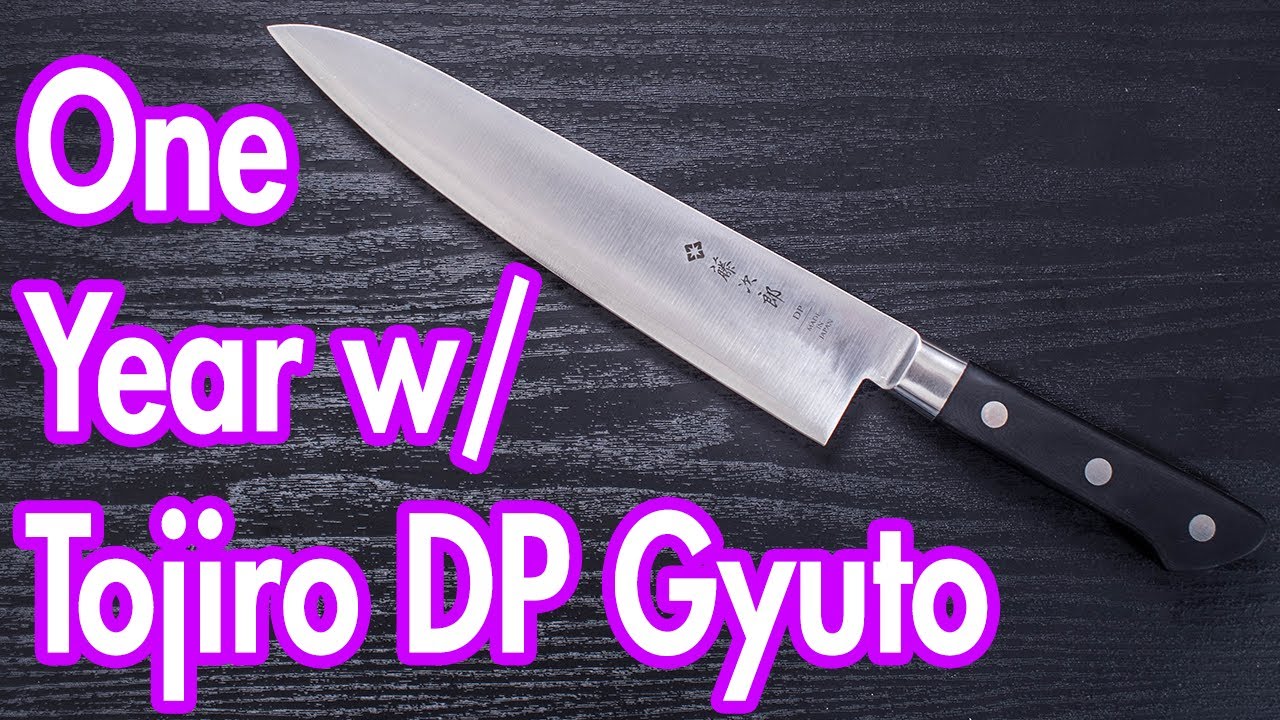
Japanese knives from makers like Shun, Misono, Miyabi, Global, and Tojiro use harder steel at 60-67 HRC. The blades are thinner, lighter, and typically feature a flatter profile optimized for the push-cut technique favored in Japanese cuisine. This harder steel holds an edge dramatically longer — a good Japanese knife stays sharp 2-4x longer between sharpenings than a comparable German knife. The trade-off is brittleness: hard steel chips more easily if used improperly, and sharpening requires proper whetstones rather than a simple honing rod. The Tojiro DP Gyuto ($50-70) is the gateway drug: VG-10 stainless steel at 60 HRC, ground incredibly thin, with performance that punches miles above its price point.
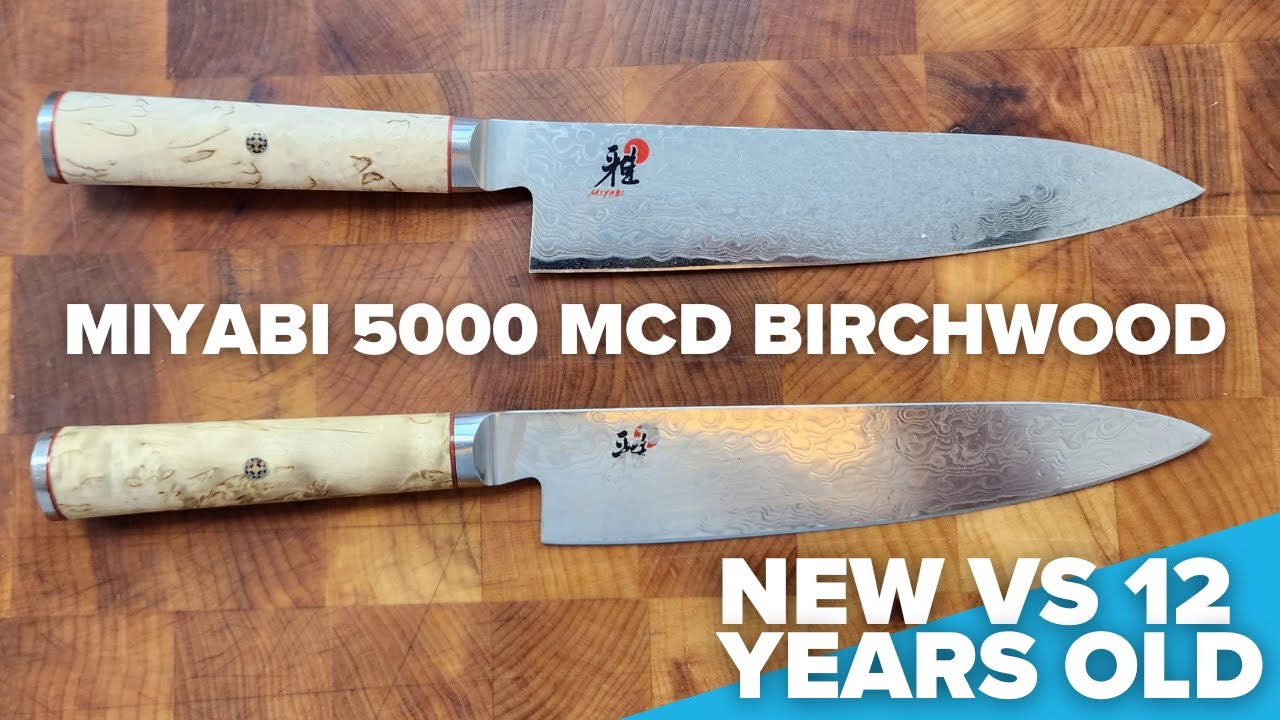
Edge geometry matters as much as steel hardness. German knives are typically ground to a 20-22 degree angle per side (40-44 degrees inclusive), creating a more durable but less acute edge. Japanese knives are ground to 10-15 degrees per side (20-30 degrees inclusive), creating a much sharper edge that slices through tomato skin and delicate herbs with surgical precision. If you've ever wondered why Japanese chefs can produce paper-thin sashimi slices, edge geometry is the answer. The Miyabi Birchwood 8-inch chef's knife ($200-250) takes this to an extreme with a 9.5-degree edge angle per side — so sharp that it requires careful handling but delivers cutting performance that no German knife can match.
So which should you buy? If you're a home cook who values low maintenance, handles a variety of proteins and hard vegetables, and doesn't want to learn whetstone technique, go German. The Wusthof Classic or Zwilling Pro will serve you beautifully for 20-30 years with minimal fuss. If you cook primarily vegetables, fish, and boneless proteins, enjoy the ritual of knife maintenance, and prioritize cutting precision, go Japanese. A Shun Classic, Tojiro DP, or Misono UX10 will reward your technique with performance that German knives can't touch. The BIFL answer might be both: a German chef's knife for heavy-duty work and a Japanese petty or nakiri for precision prep. Either way, you're buying knives measured in decades, not years.